

How to decalcify your pineal gland
The pineal gland is a small, rice-sized, pinecone-shaped endocrine organ. It sits alone in the middle of the brain, right in the middle of the eyebrows. It is a part of the brain that is crucial in regulating our sleep-wake cycle. It produces a special hormone called melatonin, which helps signal the sleep-wake cycles that determine hormone levels, stress levels, and physical performance. This gland is often referred to as being the "third eye," a spiritual chakra point residing right in the middle of your eyebrows.
Activating your pineal gland may be helpful for regulating mood, sleep, and energy levels.
How to Activate your Pineal Gland:
1. Sun exposure
2. Sleeping in complete darkness
The pineal gland is activated not only by the sun but also by darkness—complete darkness. So, make sure your bedroom is as dark as possible during your dream time. Even the small light of an alarm clock or cellphone can be disruptive to the production of melatonin, the hormone associated with sleep regulation.
3. Sun gazing
To venture a step further down the rabbit hole of experimentation, sungazing is an ancient technique believed to improve health and even induce such states as heightened clairvoyance and the ability to subsist without food or water. But bear in mind that only certain times of day—specific stages of sunrise and sunset—are recommended for sungazing. So, don’t go staring at the sun at high noon and expect to attain superhuman powers.
4. Working with crystals
Placing a crystal over the third eye while lying down is said to work wonders on activating it. Crystals with indigo and violet hues are recommended, and clear quartz will always help to amplify their properties. Some good options include amethyst, lapis lazuli, iolite, moldavite, sodalite, moonstone, and many more. Leave the stone between your eyebrows during meditation for 15 to 30 minutes.
5. Meditation
Drawing your eyes up toward the third eye, softly place your awareness on that center. Next, imagine being able to see out through the third eye (between the eyebrows). This concept alone will have you seeing the world in a new light.
Modern Concerns with the Pineal Gland
Calcification is the biggest concern for the pineal gland. Fluoride accumulates in the pineal gland more than any other organ and leads to the formation of phosphate crystals. As your pineal gland hardens due to the crystal production, less melatonin is produced and regulation of your wake-sleep cycle gets disturbed.[1]Research also reports fluoride hardening accelerates sexual development in children, particularly in girls.[2]And this is a serious concern as a study from 30 years ago reported 40% of American children under 17 were found to have pineal calcification in process. Since then, we’ve see children, especially girls, experience the early onset of puberty.[3]In addition to fluoride, halides like chlorine and bromine also accumulate and damage the pineal gland. Calcium supplements can also cause concerns. Inadequate vitamin D, which is something that affects many people,[4]can affect calcium bioavailability in such a way that tissue, including the pineal gland, may calcify. Eliminating fluoride may be the best first step for reducing health concerns. Use fluoride-free toothpaste, avoid tap water, and drink filtered water. For the best filtered water, use a reverse osmosis water filter. Eat calcium-rich foods rather than taking calcium supplements if you can get plenty of vitamin D.
Ways to Decalcify Your Pineal Gland
If you’ve been exposed to fluoride, your pineal gland has some degree of calcification preventing it from working well. Here are a few ways you can decalcify:
1. Give up processed foods
Foods with additives, preservatives, chemicals, and pesticides are all risk factors for both calcification and premature aging. That goes for GMO foods as well. Always opt for organic, living, plant-based foods.
2. Don't use sunglasses
Our eyes need indirect sunlight exposure to function properly. The pineal gland, on dissection, reveals the presence of a photoreceptor, like the ones our two seeing eyes are equipped with—hence the “third-eye” designation. The pineal gland’s photoreceptor is actually activated by light reflected from the retina, so don’t be afraid of the sun, and reduce the use of sunglasses.
3. Use essentials oils
The nose is a direct gateway to the brain and the pineal gland. To stimulate the olfactory passage to spiritual states of awareness, try sandalwood, frankincense, myrrh, clary sage, helichrysum, pine, pink lotus, and mugwort.
4. Change your lightbulbs
Fluorescent lightbulbs are both harmful to health and hard on the eyes. Replace them whenever possible with full-spectrum lightbulbs, which are more consistent with natural light. Full-spectrum lighting is often used to treat seasonal affective disorder (SAD) and sleep disorders via lightboxes that mimic natural sunlight. Not all full-spectrum bulbs are the same, however, so do some research on which ones to choose.
5. Try natural remedies
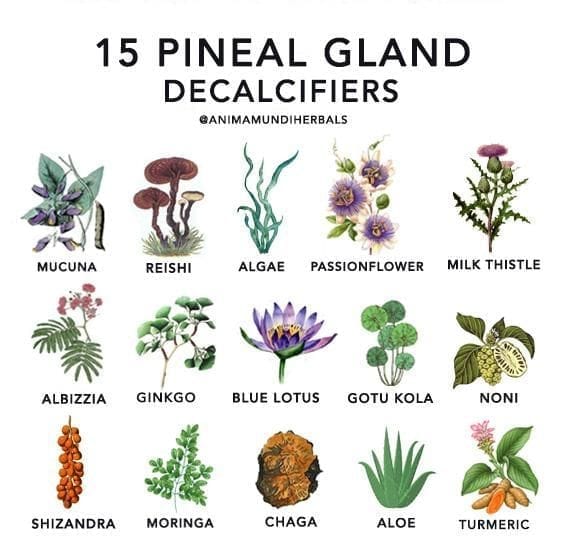
Each of these can decalcify the pineal gland and stimulate it: Gotu kola, boron, alfalfa sprouts, parsley, oregano oil, sea moss, neem oil, blue-green algae, spirulina, coconut oil, walnuts, chlorophyll rich foods, beets, apple cider vinegar, lemon water, MSM, turmeric, ginseng, and bentonite clay.
-Tamarind Fruit
The fruit from the African tamarind tree is extremely effective at removing fluoride from the body. One study found children given tamarind excreted significantly more fluoride in their urine compared to the control group and may halt or even reverse the effects of skeletal fluorosis.[5,6]
-Borax
Mix 1/4 teaspoon of borax (or boron) in a liter of water and take it in small quantities over the course of a day or two. Consult your doctor before using this method.
-Zeolites
These volcanically-produced crystals have recently been discovered as a powerful way to detoxify your body. They break down hardened calcium that forms around toxic metals in tissue and removes these heavy metals from the body.
-Iodine
Halides like fluoride, chlorine, and bromine accumulate in your tissue if you’re iodine deficient, which is an increasing concern around the world. If you’ve cut back on salt and don’t eat a lot of seafood, there’s a good chance you may be deficient. Symptoms of iodine deficiency include chronic fatigue, thyroid disease, feeling cold or a low body temperature, and hormone imbalance. To get more iodine, eat foods rich in iodine, or take a colloidal iodine supplement for the best result.
6. Cleanses
Regular cleansing enables the body to naturally remove toxins and heavy metals from the body, including fluoride.
7. Practice Kundalini yoga
Specific movements are designed to raise the Kundalini energy, which rests coiled at the base of the spine. Activating Kundalini essentially attunes our bodies to connect the cosmic energy with the physical body and root it to Earth. This serpentine energy flows upward, activating the 33 vertebrae points until it reaches the pineal gland and crown chakra. The same energy illuminates the third eye.
https://globalhealing.com/blogs/education/everything-you-wanted-to-know-about-the-pineal-gland